This is Roundtable.
Imagine a world without sound.
No laughter, no music.
Cocklear implants are increasingly now covered by insurance in China, and this can transform lives for millions.
Let's explore the impact of this change in healthcare policy.
And, we're on a mission of starting your week with a motivational kick.
Our Motivational Monday offerings will get you ready to tackle the week.
Hello, everybody. This is Roundtable, coming to you live from Beijing.
I am He Yang, and for today's program, I'm happily joined by Yu Shen and Steve Hatherly in the studio.
First on today's show, with approximately 27 .8 million individuals living with hearing disabilities in China, the financial burden of cochlear implantation has often been a deterrent for many patients.
The recent policy change to include cochlear implants in insurance coverage represents a significant step towards improving access to effective treatments.
What implications do you believe this will have on the lives of those affected by hearing loss?
For those of us who are not that familiar with medical terms, please explain what is cochlear implant or Zhenggu or Wu in Chinese.
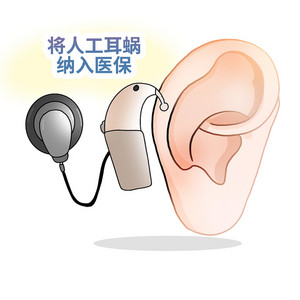
Yes, so a cochlear implant is an electronic device that helps restore hearing, and it works by using an external speech processor to convert sound into electrical signals which are then sent to the auditory nerve.
And these signals stimulate the auditory nerve, transmitting biometric impulses to the brain, allowing us to perceive sound.
And by directly stimulating the auditory nerve through implanted electrodes, the device helps restore or rebuild the hearing function in individuals with severe hearing loss.
Yeah, the implant itself consists of an external portion.
So this part sits on the outside of your ear, and then there's a second portion that is surgically placed under the skin.
The implant itself has a microphone which picks up sound from the environment.
It has a speech processor.
It selects and arranges sounds picked up by that microphone.
It has a transmitter and a receiver and a stimulator which receives signals from the speech processor, and then those get converted into electrical impulses.
There's an electrode array, and that's a group of electrodes that collects the impulses from the stimulator, sends them off to different regions of the auditory nerve.
This is a very small device, and that might imply that it's a very simple device.
It is not. It is a very, very complicated device, and we're going to get to the cost a little bit later.
But that's why this is so expensive, and that's why this is such an important story here in China.
The implant itself – sorry to interrupt – it doesn't restore normal hearing, by the way.
Instead, it gives a deaf person a kind of useful representation of sounds in the environment, and it helps that person to understand speech itself.
The most sort of mind -blowing thing for me, looking at this, is I thought it was some kind of hearing aid that you put on the ears, but actually this is some kind of – this is a very professional medical procedure.
This is a surgery. Yes.
It's a surgery, so one has to be put under for this surgery to happen on you, and then it's with you for life, right?
It's not something you can just take off, so to speak.
As you explained, that's why it is widely acknowledged to be the most effective treatment for hearing loss.
But the procedure typically costs over 300 ,000 yuan.
That's about more than 42 ,000 US dollars.
So without insurance, it is simply just too much for the vast majority of patients to afford.
Of course, yeah. Really, really expensive to get this procedure done with no medical coverage at all.
Yeah, and just look at the figures, a report by the research firm Insight and Info estimated that in China, there are 7 .4 million people who are eligible to receive cochlear implants.
However, in reality, only 50 ,000 people or less than 1 % of those in need can actually get this implant in their ears.
Yeah, so think about how important this development is for those 7 .4 million people.
Yes, indeed. So tell us about the latest expansion of insurance policy coverage for cochlear implants.
Yes. So as you said in the beginning, an increasing number of regions here in China are including cochlear implants within the scope of medical insurance.
One example is in August, the southern island province of Hainan become the latest region to extend coverage to cochlear implant surgery.
And also, according to Xinhua News, in total more than 10 provincial -level regions such as Shanghai and the neighboring province of Zhejiang and also Shandong Province in northern China are now including the procedure in their local insurance program.
And it means that patients in need of cochlear implants can now use their medical insurance to cover part of their medical expenses.
And each medication and region has their different standards and reimbursement rates, and with the maximum reimbursement amount reaching up to 450 ,000 yuan, that's about 63 ,000 US dollars.
Okay. So that's a pretty significant portion that is returned to the patient.
It's great news. It's really expensive, isn't it?
It's really, really, really expensive.
And without, as we mentioned, if you don't have healthcare, if this isn't covered, then I mean, if you had healthcare, it wasn't covered before, but this is going to be giving people a life change that they probably thought they would never be able to receive.
Yes. And Steve, are cochlear implants covered by public health insurance in the US and Canada?
So in Canada, I was looking at one particular story about a family in Ontario, and it was a bit of a controversial story, and the family was very upset because they had a baby that couldn't hear from birth.
And by the way, when we think about cochlear implants, we think we automatically, or I this is for anyone who, I mean, in this case, a baby was born who couldn't hear.
So the family, of course, decided to go the route of cochlear implants, and that in Ontario was completely covered, the procedure was completely covered by Canada Healthcare.
However, and this is why the family was upset, the warranty for that child's implant was up at the age of five, and the parents were complaining, we are now responsible for paying for the replacement device, which is about $11 ,000 to $15 ,000.
And the family was saying these implants, or the ability to hear, should not only be for the rich.
Now that was only one particular story from Canada, but that gives you a sense of what happens there.
The initial procedure was covered, the initial implant was covered, but when it needs to be replaced, that's out of the family's pocket.
And also just by looking at Canada and the US, these are vastly different medical insurance systems to start with, because in the US it's not state medical, not universal healthcare.
Yeah, exactly. And in America, you'll find some different prices according to which kind of medical center you look at.
But the average range is about $50 ,000 to $100 ,000, that's influenced by your location and of course your insurance coverage.
Medicare, if you have it, will cover up to 80 % of the implant cost, with patients being responsible for the remaining 20%.
But in America, there are various payment options, and then there are also financial assistance programs that can help to alleviate that financial burden.
And it's just great news to know that more people here in China, which in the past might think that this isn't even an option, because when we go into more of these examples of how the impact is already seen by those in need, every time, when the hefty tag price of these cochlear implants appear, it
just sort of makes my heart stop a beat.
But the great news is that more and more people are going to be able to enjoy this medical surgery and the benefits it brings.
And that's just such a great thing.
Yeah, you know the most obvious change I think is definitely that more people are using the cochlear implant, but they are spending less on this thing.
You know the number of patients using cochlear implants has already increased because we can see since Jiangxi in southern eastern China, southeastern China, I mean, included cochlear implants in medical insurance last September, and then over 170 patients have received treatment so far.
And we can see a specific example is at Jiangxi Children's Hospital, an eight -month -old baby named Xiaorei who recently underwent cochlear implant surgery is currently preparing for his activation after a month of recovery.
And then his father explained that the original cost of their implant was over 540 ,000 yuan.
That's even way more expensive than the average price.
So now with medical insurance coverage and additional support from the local disabled persons federation and also with the assistance for low -income families, there are some also local policies and local subsidies from local communities.
So their out -of -pocket expenses came to around 37 ,000 yuan.
That's even less than 10%.
Yeah, that's about a little over $5 ,000.
What an amazing thing.
And I just mentioned that in America, they have 20 % goes to the patient.
But then there are various assistance programs.
Same thing, we just heard it.
There's various assistance programs here that can even decrease the cost further.
And that's such a massive difference going from $75 ,000 down to $5 ,000 for this life -changing procedure.
Yes, that is definitely a great improvement.
But for families who are under a lot of financial stress, that 37 ,000 yuan sounds like a lot, too.
So I mean, this is just off the top of my mind.
I understand for a procedure and a medical piece of equipment to be this expensive, there must be so much technology that goes into it, so much R &D, research and development.
That goes into it. Otherwise it wouldn't be this expensive.
But in the long run, if this whole procedure can, if we can see the price brought down thanks to more advancement in technology or whatnot, then I think that's when it can really be more available to more people.
But aside from all of this, we're seeing that thanks to the availability of it and more accessibility of it.
And maybe, like I mentioned earlier, previously people didn't think this was an option.
But now for a wider swath of our population, this can be something being discussed.
This can be something that people can really sort of put on the agenda and enjoy really a very different kind of life if they can enjoy it.
One thing that I can think of is that previously, maybe, elderly people, they think, okay, when people getting older, their hearing will get affected.
But that actually means that their life quality may be affected as well because they cannot basically hear all the things that surround them.
So in the past, elderly and rural residents often did not prioritize hearing impairments.
But since the implementation of this policy, the number of cochlear implant surgeries for elderly and rural patients at Qilu Hospital, which is a hospital in Shandong Province in northern China, has significantly increased, especially for patients aged 60 and above.
The number of children with hearing impairments receiving surgeries has also seen a remarkable rise with a growth rate exceeding 50%.
What we can see is that more and more people are eligible and, of course, they can afford to use these kind of technology that brings their life better.
And we've been talking about the scope of this new addition to the insurance policy.
So far it's not rolled out entirely in the country, but does this mean that individuals in regions without this insurance coverage will be missing out on its benefits?
That is a point I would like to mention previously because you said some other countries' medical system, they are not universal.
And what we can see is that here in China, the medical system is connected nationwide.
So we can see many regions can utilize out of province medical insurance as the system is interconnected in the whole nation.
So Xiaowu, who is a mother from Eastern China's Zhejiang Province, took her 10 -month -old son, Chen Shun, to receive a cochlear implant in Shanghai last month.
So they are a family in Zhejiang Province, but they can use this medical insurance in Shanghai, which means if your region is not available with these kind of policies, you can still go to maybe a nearby region to get these kind of insurance policies.
And then you can, of course, reduce the cost that you are spending on these kind of products.
So if you live out of province or if you live away from that region, you can still travel to that region and enjoy the benefits there?
Oh, that's really, I mean, that takes a lot of stress from people as well.
Talking about the cost and you were making the point, the young lady, yeah, $75 ,000 to $5 ,000 is a massive reduction, but it's still expensive for a lot of families.
And that's true. And those who are in extreme need can get up to 90 % of the cost reimbursed.
Will it ever become completely free?
Who knows? Maybe not.
But still, at the same time, when you can get that amount reduced, then at least that makes it plausible.
The total cost of a treatment can be 550 ,000 yuan.
That family that you were just talking about, Yushin, they only had to pay 100 ,000 yuan thanks to the insurance payout.
And for that particular family, that's still a lot of money, but it made it possible for them to have this done.
And like you said before, this wasn't even on the radar for people as a possibility in these rural communities before.
So this is something that was unexpected and this is something that is going to change the life of the individual who got the procedure done.
But if you think about it more carefully, it's changing the lives of the individuals who live around that person too.
Well, can you say a bit more about that?
You know, what is really the significance of including cochlear implants or really significantly, fundamentally changing one's ability to hear?
Yeah, I looked at a study from BioMed Central Health Services and they wanted to know the impact of cochlear implants on patients' lives.
So the studies were conducted on health service utilizations and they found that the patients reduced their use of prescription medication and it reduced the number of trips to the hospital as well.
So there is one benefit.
There was reported improved social outcomes and social participation.
And that makes sense, right?
If you have this procedure done and you can all of a sudden have the ability to take part in conversations with people, that's not only going to encourage you to be more social, but it's going to increase the quality of your relationships as well.
So that was a big benefit.
Improved work and employment situations.
That was a benefit.
I didn't even think about that, but that totally makes sense.
Improved education outcomes.
That one is a little bit common sense, right?
Especially for young people in schools.
And this last one too didn't really come to my mind immediately, but it makes sense.
Improved income, right?
Because that's connected to improved work quality.
If people have the ability to work more, be more social, be more confident, that's reflected in their income as well.
That's not my opinion.
That's what they found from this research from BioMed Central Health Services.
Can I just also add a footprint to that, a footnote to that?
That is essentially, I think when we talk about a lot of these health issues of vulnerable groups or whatnot, we need to talk about employment.
We need to talk about, okay, through these kinds of procedures and treatments and then this person can join the workforce.
And that is such an important link in this whole discussion, because it's through financial independence can one truly acquire dignity and feel that you are indeed an active and productive member of society.
And you know the kind of empowering feel that brings to a person.
And I think essentially that is how we can build a more inclusive society and really bringing all the members who can contribute and earn a living have a say being heard.
And that is just so important in the grand scheme of things.
Oh, no doubt about it.
But you might have the question, why now?
Right? I mean why has it been such a challenge for cochlear implants or the procedure to be covered by medical insurance in the first place?
Yeah, of course. We've been talking about this a lot.
The high cost of cochlear implants is the main barrier to including them in medical insurance, you know, because if centralized procurement can significantly lower prices, like, you know, it's just like a group purchase.
You know, when we like this kind of medical insurance administration are purchasing some medical devices or drugs in a huge amount, then the price can be cheaper.
Yeah, same economic rule applies.
Buy in bulk and the price goes down.
Yes. So this would provide a dual benefit of substantial price reductions and insurance reimbursements for hearing impaired patients.
So according to some reports, the national centralized procurement of drugs implemented since 2018 has led to an average price reduction of over 50 percent through a group buying approach that leverages bulk purchasing.
But still, there are some difficulties on these policies because, of course, people know ah, then just by all of the drugs or all of the devices with like a group purchasing, it's impossible.
And all of these medical companies, they are also trying to produce these companies, not for, you know, less profits.
They, of course, want more profits.
But the thing is that the system is trying to do this kind of thing and more and more items are getting included into this system.
And also with some of the rarer devices, equipments or whatnot, and sometimes, you know, with certain solutions, you need tailor made additions to them.
And then which makes the bulk buy maybe a little bit more tricky than, you know, just on the surface in a blanket statement when people talk about these issues.
So there are some of these intricacies in the bulk buy and group negotiation in bringing prices down.
But it's definitely I'm still here very hopeful in terms of if we could see more technological development and maybe more companies researching and getting involved in the area that could possibly in the future bring prices down a bit further.
And there are just so many diseases, medical conditions that need more research, need more cures.
And yeah, well, I've never thought about saying this before coming onto this show.
But yes, I'm seeing the great responsibility of big pharmaceutical companies in that sense.
Yeah, well, actually, there are when we talk about benefits, there's one thing that really kind of moved me because when you think about children like you said, Steve, that maybe some people would automatically think about, oh, hearing loss, this is associated with older age.
But actually, these cochlear implants can make such a difference for kids.
The younger you get them, the better the result.
Well, yes, of course, because hearing impairments, they really hinder a child's speech and therefore cognitive development.
It affects their learning ability.
And then later in life, you can talk about things like employment and marriage.
Those those things come much later.
But this is particularly important for hearing impaired children who are under the age of three.
And at that point in life, they're in a really critical period for auditory development.
So including cochlear implants in a centralized procurement that enables them to receive timely treatment, not just treatment, but timely treatment.
And that really enhances their chances of effective hearing and language training too.
And what kind of changes do you think this could bring to, you know, medicine and these related services?
Yes. As you mentioned that there is a huge role in as large medical companies, of course, with the policy coming up or including more devices, it helps drive advancements in research and the resolution of related challenges because the number of surgeries increases hospitals and research institutions accumulate more experience on these fields.
And that would be a very good thing.
Needless to say, by reducing financial barriers, this initiative not only enhances access to essential health care, but also fosters social inclusion and personal empowerment.
And the ability to hear can transform lives, allowing individuals to engage more fully with their communities and loved ones.