Discussion keeps the world's turning.
This is Roundtable. Hello everybody, welcome to Roundtable coming to you from Beijing.
I'm her young, good to have you with us on a day's show.
We've come a long way from the days when dogs were just for security and cats for catching mice.
Now we're seeing pets being pampered in ways we never imagined.
Just behind this major shift in perspective, we're taking a deep dive into humanity's greatest love affair, our relationship with our pets.
And from mesmerizing tunes to unforgettable experiences, we're sharing the happiness that lit up our week, essentially what's made us happy in Roundtable's happy place.
For today's program, I'm joined by Yushan and Steve Hathorley.
First on a day's show. Let's dive into a fascinating phenomenon that is taking China by storm, the booming pet economy.
Did you know that in 2022, this sector reached a staggering 494 billion yuan or about $68 billion US dollars and hold on to your aliexials because experts predict this figure will double next year.
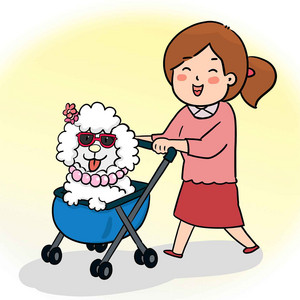
From pet kindergarten to furry friends being pushed in strollers, it's clear that pets have become more than just animals.
Their family. So what's driving this possum trend?
What do the numbers say, Yushan?
Well, before I get started, can any of you read off of my t-shirt today?
I work hard so my cat can live a better life.
Exactly! Oh, fantastic!
When I heard that we're talking about pet economy in China today, I'm like, I have the exact outfit that I want to wear for this show.
But anyway, why are we talking about it?
It's because the number of pet dogs and cats in urban areas in China reached a number of 121.5 million in 2023.
And that is according to the 2023-2024 China pet industry white paper, which is a consumer report jointly released by petdata.cn, China pet industry, association, and Chinese veterinary medical association.
And just take that as a reference, okay, because some other sources that I've been looking on that I've been checking says that the total number of cats and dogs in urban Chinese households had reached 220 million.
So if you look at this pet economy from market size, then in 2023, this is also according to the white paper, the size of the urban pet consumption market in China was 279.3 billion yuan, which is around 39 billion US dollars.
And is expected to keep on growing in the next few years as well.
It is a massive, massive industry, isn't it?
But yeah, now that we're looking at it, we think the number looks massive and so impressive.
But if we take a little bit of comparison, we see that data also shows that from 2019 to 2023, the ratio of Chinese households with pets has been increasing annually reaching 22% in 2023.
But that in the American households that own at least one pet is already getting to around 66% this year in 2024.
So we still have a long way to go.
And America is still chasing Canada as well.
In Canada, 77% of households have at least one pet.
Wow. Seer here. Wow. 77%.
Yeah, that's according to status.
There were 28.05 million pets in Canada up from 27.98 million in 2020.
These numbers are a little bit old, but they are predicted to rise as well to over 28.5 million in 2025 in Canada.
Here's a guessing game.
Quiz time. What's the most popular pet that Canadians own?
It has to be dogs. Cats. Oh, ding-ding, cats.
Yeah. Those popular pets to own are cats followed by dogs, of course.
23% of Canadian households have a cat.
20% have a dog. 13% have both cats and dogs.
But isn't that amazing?
77% nearly 80% of the Canadian homes have a pet inside.
I know, right? Every seven people in 10.
Yeah, exactly. Almost eight, right?
Yeah. And when you look at here in China, actually, there's been a major shift in perception.
Because in the old days, let me just say 10 plus years ago, I mean, in a lot of rural households, yeah, you have pets.
You have dogs and maybe other animals.
And you just throw it old bone to the dog and then it, or whatever, leftovers you have from dinner, you give it to the pet.
But now, I guess a lot of this exponential growth we're talking about in the number of pets in China.
A lot of them are in the urban setting.
And then I guess it's a completely different ball game when we talk about it.
Because in the rural areas, there's lots of space for pets to enjoy life.
But in urban settings, it's completely different.
And I guess it might be only person that's not had a pet now or recently out of us three.
Or in your life. Well, my grandma had a cat.
But and also other family members have had pets before.
And I saw how to strut everybody got.
Okay. You know, the pet is going to leave this world before you do unless you raise a turtle.
So I'm a very sentimental person and I just don't want to put myself through that.
Yeah. I know what you mean.
They say when you get a cat or a dog, you're guaranteeing yourself the best day of your life and the worst day, one of the worst days of your lives.
If you can read between the lines about what I'm saying there.
Yeah. But you're right.
I mean, it's a shift in sentiment.
It's a shift in perception.
And a long time ago, people would keep their dogs maybe outside all the time and you know, they lived out there.
But now they're a member of the family.
And that's how people are seeing them.
And that's how things are changing or tilting tours here in China as well.
And what is the typical sort of profile of owners of pets in China?
Could you go a bit deeper into the figures for us?
So basically, it is discussed in a report by Da Shu, which is a Chinese market research and strategy consulting platform that both the millennials who are people born between 1981 to 1996.
And also the elderly generation in China are turning to pets for companionship as the major group that's behind the figures we are discussing just now.
And also in general, about 42% of the Chinese pet owners are aged between 26 to 30 years.
So that would actually speak a lot to me because as a millennial myself, I do see that a lot of my colleagues and my friends around me were behind this whole phenomenon of pet economy.
And that we're really trying to support this by sending each other social media posts and stuff, which is like going viral these days.
And a large number of my family members, they're also into this as well.
About me personally, we have three cats in the household, me personally am keeping one in my apartment right now.
So yeah, for us, it's like a big thing, a big deal.
Is it people in China you talked about before, who young how it was mostly in rural communities perhaps, but do the numbers suggest that now people who live inside Beijing or Shanghai or some of the other bigger cities in China?
Are they now owning pets too?
I think much of the growth comes from the urban settings these days.
Yeah, definitely is the mainly the city people that's keeping pets in the scope that we're discussing today because according to the data, 61% pet owners in China are female and 38 are male.
And for these bunch of people, they're mostly pet owners that dwells in the urban scenarios who's mostly using pets as an emotional sustenance or an emotional companion to soothe the work pressure and the fast-paced life.
Yeah, so that suggests that these are office workers who go out during the day, their cat or their puppy stays at home and then come home and that's your friend that you come home to after a busy day of work in the city.
Yeah, and when you look at urban in rural, allow me just to go a little bit further on this subject.
I suppose for most Chinese rural families, it's highly possible they have dogs or cats.
It's really dogs, I suppose, to guard the courtyard kind of thing, but I wonder if that's being included in these surveys.
It's the same in Canada, I think, you know, when we look at these statistics, we have to kind of take them with the grain of salt because not everyone registers their pets.
Exactly. So the numbers are probably even higher than the ones that we're reporting on here.
Yes, and also I wonder how do these folks view the dogs and cats and animals in their lives because they have a very practical function that they deliver that is guarding your home in these rural settings.
But do you see it as more of providing the service as well as the emotional sort of?
I think the answer to that question probably lies in the statistics about pet clothing.
Because if you look at your pet as kind of a guard dog or someone or someone, something that stays outside, well then you probably wouldn't buy a furry coat for your dog.
It sounds very warm. But the pet clothing industry itself is booming too, isn't it?
Yes, exactly because in China, and that's also according to the report that I was referring earlier, the most commonly purchased items for pets these days are cleaning and care products accounting for 69% and also followed by pet clothing and travel accessories at 54% which is relatively high.
In Korea, the pet clothing industry is massive from the Jumang Daily which is a Korean media outlet from last year.
There's a company, an online e-commerce company called Messina and they're seeing massive growth in the market.
When they reported their revenue for their pet products last year, it was up 40% the year before pet clothing specifically grew 95% year on year.
The pet product and service marketing in Korea has grown every year.
It seems for the past, oh gosh, I don't know how many years and it's at $3.52 billion at the moment.
Oh my gosh. Speaking of the case in Korea, I was reading a piece of fun news earlier that according to data from G Market, I'm not sure if you've heard of this before.
G Market's one of the big online shopping sites.
Yeah. So it's a shopping website in South Korea.
So according to this website, pet strollers, guys, pet strollers, sales in the first three quarters of 2023, exceeded baby strollers or the actual strollers sales for the first time.
So shocking to me. So more strollers were made, were designed in the first place for pets now than for babies in Korea.
Hold on. I remember when I first went to the US when I was very young, when I was an elementary school student, first I went to New York City in the 1990s.
I remember it astounded me that there are actual people being hired to walk dogs.
That's a big industry too, I think.
So hold on. Dogs are supposed to get out of the house and run around.
Now you put them in baby, sorry, pets strollers.
What's going on? Yep, you absolutely do.
And a little further on what you said about G Market, more specifically the strollers sold for pets accounted for 57% of their sales.
Strollers for human babies accounted for 43% of their sales.
In Korea, this is not uncommon at all.
You walk down the street in Seoul or Busan or anywhere.
You can find someone. You can find many people as a matter of fact taking their dogs for a walk in a baby stroller.
It's a really common sight to see.
Are the dogs too old or too frail to walk?
Sometimes yes, sometimes no.
It's just kind of a little mode of transportation for them.
A way to get around. Yeah, it's a new definition of walking your dog.
Yeah, exactly. And so, quote unquote, walk them, but in the meantime is to people walking and enjoying humanized way of connecting with their pets by seeing them as babies or I don't know.
It does sound a little bit ludicrous on the surface, but you're right.
When dogs get older and they can't really go for a walk themselves much anymore, they still enjoy the sights and smells and sounds of being walked in the city or outside the city.
So, yeah, there's a good reason for that.
But I mean, if it's a young healthy dog, you can question that, I suppose.
The dog is like, freemey from this thing, please.
I need to run around. All the faces of the dogs that I saw looked like they were living their best life in that stroller.
And cats too. I've seen cats in those strollers too, but most cats are, well, indoor animals these days, especially in urban scenarios.
They're like, what am I doing here?
Get me back. Get me back.
So, yeah, they look scared, but in the meantime, discovering new things out of curiosity, like Steve said, too.
Yeah. People in Korea, they're spending a ton of money on their pets in terms of clothing, accessories, things like that.
Those numbers I assume in China are growing as well.
If the number of people keeping pets is increasing.
Well, it is increasing.
In the meantime, that's a lot of money spent on pets for like a random pet owner because it is estimated that the cost of having a pet here by a pet I'm referring to a cat or dog-sized urban home pet is between 5,000 yuan and 23,000 yuan, which is 750 to 320 US dollars per year.
That's a lot of money. That's a lot.
Yeah. And that's a great reason to not make me into a pet owner.
Well, yeah. And it's important for people to know that, right?
It's very exciting and it's very romantic to have the idea of adding a member to your family.
I'll be at a cat or a dog or whatever you choose, but you have to know this before you make that purchase or unless you're getting them from a rescue, which is a wonderful thing to do as well, probably the appropriate thing to do.
But you do have to be aware that there are costs that come along with having a pet as well, not just things like food for every day, but also things like unexpected trips to the vet, Trinarian.
Those bills can be quite expensive too.
And before you get your pet, you have to be aware of those types of things to make sure that you can afford it.
Yes. And can I just add one point to that recently saw this article from the New York Times, which looked at how healthcare for pets have become so much more like healthcare for people.
And therefore the costs have ballooned that healthcare for pets has now become a multi-billion dollar industry.
Oh, absolutely. The good news is is that before when you are doing your research, you know, knowing what type of dog you want to get, for example, you can look at specific types of breeds.
For example, bigger breeds will cost more on an annual basis than smaller breeds.
Great gains. You know what a great day means?
Yeah. Because they're huge, right?
They're handsome ones.
In the United States, they cost about $35, $3600 a year, but smaller dogs, medium-sized dogs, maybe a, I don't know, maybe a cocker spaniel, for example, might cost about $28 or $2900 a year.
So you can look that information up online and do some extra research, maybe to know how much you are expecting to spend on your pet in a year.
I think that's definitely important information, but what's really difficult for a lot of pet owners in the US or, you know, and these places where have really advanced medical care for animals, it becomes a very difficult emotional choice.
Let's say when your pet gets to the moment when there is the medical treatment available, which comes with a hefty price tag that you are paying out of your pocket, but do you want to prolong the pet's life and at what expense?
Because is it always at the best interest of the pet to prolong its life when we're talking about, well, there's one example.
One person being interviewed by the Times Heather Mazley of Carlton, Georgia, who is still paying off a bill for scans and care six years after her previous dog, Lady Bird, was diagnosed with brain cancer.
So I think it opens up to this whole new scope of financial responsibilities as well as emotional and ethical decision here.
Yeah, you're right. And that's the point I was making before about unexpected costs.
Of course, you want to keep your pet as healthy as they can be, but things happen, right?
And you have to be prepared financially for those things to happen too.
Yes. And what about here in China that we see on the one hand, there's definitely a growing pet economy, which covers a lot of different areas and its impact on our society.
So yeah, on this society's scope, I think there's two major elements that's really supporting the pet economy, at least the booming side of it in China lately.
And number one is that the e-commerce growth, which has played significant roles in boosting the pet economy because online platforms nowadays could offer a wide range of pet products and services here in the Chinese market.
I'm not so sure. I'm not certain about how that's turning out in the Canadian or Western or American market.
But in here, and this is according to IMedia report, says that 47% of consumers here in China buy pet products from offline pet stores while 52% purchase from online channels, which is what I do.
So yeah, I think these days e-commerce and online shopping methods, they're really providing like really convenient ways for pet owners to take care of their pets.
At least for me, I buy all of the toys, the daily groceries and stuff from my pets from online channels as well.
And in the meantime, we see a rise of Chinese domestic brands because currently the domestic market, like the Chinese pet food market, is experiencing a three-way competition between traditional pet food and supplies versus well-known foreign brands versus emerging new brands.
When you see people starting to get more pets, bring more pets into their homes.
There's this big snowball effect in different economies, but there's also different snowball effects and things that you perhaps wouldn't think of initially.
For example, social media, you get pet related online content, right?
You get people taking their pets out with them more.
And when they take their pet with them more, that means you're going to have businesses that respond, for example, pet-friendly cafes will start to pop up.
I was having a walk the other day and I saw exactly that.
There was a coffee shop and it was an indoor outdoor coffee shop and you could bring your dog inside or outside and that was kind of their theme.
So it's kind of like a spiderweb, isn't it?
You see the number of pets increasing in homes, urban and suburban areas, then you see online content, then you see an increase in online sales and offline sales, then you see things like doge start to pop up.
Do you know what that is?
What is that? That is dog yoga.
Oh, yes, it's a thing. It's a real thing.
It sounds fancy. All it is is you take your dog to yoga with you.
I was having a look at a doge website and the description was so funny because it was like, some dogs will choose to take part in the yoga session, but others will just choose to accompany you and stand by and wait for you to finish.
Yeah, of course that's what they're going to do.
You can't have a dog perform like downward dog, ironically.
But you see things like this start to pop up too.
Why? Because people love their pets so much.
They are a member of the family and some people want to include them in absolutely everything.
You'll see hotels, pet friendly hotels too, designed for dogs where you can bring your dog and they have little play areas, meet other friends and things like that too.
And yeah, if I'm remembering it correctly, Ho-Yang did round table ever touched upon the topic of how one airline in China is allowing pets to enter the cabin seats or there in 2022, I think.
Yes, high-non-error lines.
Yeah. And also the other day when my friend and I were checking out restaurants where to go to that night for dinner, well, there was a nice restaurant that was dog friendly, pet friendly.
We went there because my friend has a pet dog.
And the puppy came to dinner with you?
Yes, it did. And how did you feel about that?
But it was nice when strangers, other diners would come and talk to you and then you'll start a conversation which you don't usually do, not in the same way.
Yeah. Because other things too, there's cat massage therapy, there are...
Acupuncture services?
Acupuncture services.
My dog did that and it worked remarkably by the way.
My sister sent her dog to, it's called Incana, the Doggy Daycare, which sounds a little silly.
But it's a place where you take your dog and while you're at work, they train them.
They play with them, give them exercise, but they train them as well.
And these are quite expensive lessons that the dogs receive, so that's why this industry is so booming.
And we see evidence of exactly the same kind of daycare services here in China as well, because it was reported that a growing number of pet owners in China are spending huge amounts to send their cats and dogs, well, mainly dogs in this scenario, to Kindergarten's where they are while the pet owners are at work.
So we're really... It's the same thing.
We're really seeing furry children as children because we send them this girl.
Yes, indeed. And as we protect human-like emotions onto our pets, include them in our lives, it's crucial to recognize the responsibility this relationship entails.
In China, in my opinion, we need better and more responsible pet owners by embracing this responsibility, we're not only enriching our own lives, but also ensuring the well-being of our loyal companions, creating a more compassionate society for both humans and animals alike.