This message comes from Capital One.
Banking with Capital One helps you keep more money in your wallet, with no fees or minimums on checking accounts and no overdraft fees.
Just ask the Capital One bank guy.
It's pretty much all he talks about, in a good way.
Capital One, what's in your wallet?
Terms apply.
See CapitalOne.com slash bank.
Capital One N.A., member FDIC.
One thing that's been interesting watching the rise of the New York mayoral candidate, Zoran Mamadani, who's a Democrat, is watching precisely how much of the Democratic machine has come out to support him.
After he won the Democratic primary, of course, normally the party would fall in behind him.
And in fact, some prominent Democrats have come forward and endorsed him, but not all of them.
Not some of the most important New York Democrats.
Senate Minority Leader Chuck Schumer.
House Minority Leader Hakeem Jeffries.
Former New York Mayor Michael Bloomberg.
And I'm bringing all this up today because, watching this, it reminded me of the story of another charismatic politician ages ago.
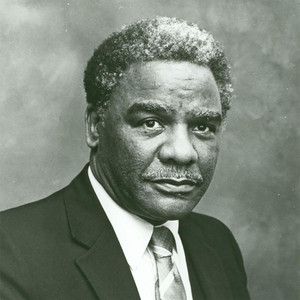
Harold Washington, the first black mayor of Chicago.
Harold became mayor back in 1983.
And that was so revolutionary at the time that a black man would become mayor of the city of Chicago that after the primary the Democratic Party turned on him and an old-school Democrat, a white guy, ran as an independent against Harold in the general election, much like Andrew Cuomo has done with Mamdani.
Back then, most in the Democratic machine endorsed the white guy in the general election.
And then, once Harold took office, Democrats continued to fight him and the changes that he wanted to make.
I want to be clear, like, I don't want to oversimplify in comparing these two stories.
So much of Harold's story is very different than Zohran Mamdani's.
The opposition to Harold was over race.
The opposition to Mamdani is more about his views on Israel and his socialism or progressivism, or whatever you want to call it.
The race and religion, the fact that he's Muslim, is definitely in there too.
But Harold's story is a parable about a Democrat whose very existence made the party have to question what it was all about, which seems very much like Mondani.
So we're going to replay his story today.
Back in 1997, 10 years after Harold died, we did a full episode about him.
And can I say, if you don't know anything about Harold Washington, you're in for a treat.
He is, this charismatic, idealistic man very funny, very smart, great talker, a Democrat framing issues with a skill that it is really hard to think of any Democrat in office right now who does it as well, but also a pragmatist.
Somebody got elected, somebody got things done.
So I hope you like this.
It's one of my favorite episodes we've ever done.
Here we go.
Here's that show from 1997.
Before our story begins, let's remember how it used to be.
Jackie lived on the south side in a black neighborhood.
City didn't enforce the housing code properly, didn't investigate arsons.
There would be fires going on and going on daily, several times a day.
And it was just fire engines all the time.
And so my daughter started to believe that when buildings got old and died like people got old and died, that a building was old and was dying because it would burn up.
Before our story begins, Chicago was run by the Democratic machine and black alderman Danny Davis would turn out the vote for the machine, election after election.
But the machine didn't reward the black wards for those votes the way it paid back the white wards on the north side with street cleanings and sewers, with newly paved roads and sidewalks.
Economic development money.
Well, actually, you know, we had called the areas colonies.
I mean, and just basically picking up the garbage in these wards, just trying to keep them clean, is a real problem.
The person who was elected.
You know there would be so much focus there on garbage pickup that you know you'd almost have to just be the garbage alderman.
I mean, I recall telling people time and time again that I was tired of just being the garbage alderman.
Before our story begins, the Chicago political machine squeezed Black kids into mobile trailers behind public schools rather than let them attend white schools, just blocks away.
Before our story begins, the Chicago machine built high-rise public housing to hold Blacks on the South Side and keep them from moving into white neighborhoods.
Before our story begins, the Chicago political machine built a system of highways that coincidentally, divided black neighborhoods from white and particularly insulated the mayor's all-white neighborhood, Bridgeport.
Typical inequities?
Unemployment in the white 11th ward was 0%.
Unemployment in the 4th ward, where blacks lived, was 25%.
This is a story about one ethnic group doing what so many other ethnic groups have done in this country put its own candidate in city hall, won the mayor's office.
But because this ethnic group happened to be black.
What happened was, unlike anything, that happens when an Italian politician or an Irish politician or a Jewish politician takes city hall.
White voters deserted their own political party.
White politicians tried to stage a public, slow-motion coup.
And the mayor faced pressures that were different from those faced by any white mayor of any city in America.
And nobody tried to pretend that the fight was not about race.
Good evening.
You're on with Harold Washington.
Good evening.
Mr. Washington, could you clear up a point for me?
I understand that once you move into City Hall, you're going to remove all the elevator boxes and replace them with vines.
Is that true?
What?
Replace them with what?
With vines.
Vines, V-I-N-E-S?
You know what?
I'm not even going to ask you why.
No, I don't think we have three million Tarzans in this city.
Randall is great.
Welcome to WBEZ Chicago.
It's This American Life.
I'm Eric Glass.
Today we're bringing the story of Harold Washington, Chicago's first black mayor.
He died early in his second term of office back in 1987.
One of our programs today is about what happened during Harold's life.
Then we have a short act two about what came afterwards.
A word about the voices you're going to be hearing over the course of this hour.
It's mostly people who are close to Harold Washington.
Many of them activists and politicians.
Lou Palmer, Judge Eugene Pincham, Congressman Danny Davis, then Alderman Eugene Sawyer.
There are people from his administration Jackie Grimshaw, Grayson Mitchell, Tim Ewell Black and some reporters who followed his story.
Vernon Jarrett Monroe Anderson, Gary Rivlin, Laura Washington, who later became his press secretary.
There will also be an occasional opponent or voter.
Stay with us.
Support for This American Life comes from Squarespace.
Their AI-enhanced website builder Blueprint.
AI can create a fully custom website in just a few steps, using basic information about your industry, goals and personality to generate content and personalized design recommendations.
And get paid on time with branded invoices and online payments.
Plus, streamline your workflow with built-in appointment scheduling and email marketing tools.
Head to squarespace.com slash American for 10% off your first purchase of a website or domain.
Support for This American Life comes from Indeed.
Indeed's sponsored jobs helps you stand out.
According to Indeed data, sponsored jobs posted directly on Indeed have 45 more applications than non-sponsored jobs.
Speed up your hiring right now with Indeed and get a 75 sponsored job credit to get your jobs more visibility at indeedcom slash American.
Terms and conditions apply.
Hiring?
Indeed is all you need.
This is American Life, Act One, Yesterday.
For decades, Chicago politics had been run with an iron hand by the legendary political boss, Richard J Daley.
Our story begins just after his death in 1976, when the machine was sputtering a bit, with no strong leader and the possibility, a small possibility, of change.
To give you a sense of what it meant to be a loyal black alderman in the Chicago machine at that time, consider what happened in City Hall the day Richard Daley died.
By tradition, the president pro tem of the city council should have least occupied the mayor's office until such time as a process was determined for the election of a new mayor.
And who was the president?
That was Wilson Frost, a loyal black alderman from the 34th Ward, a daily Democrat, a lawyer, impeccable reputation, impeccable credentials.
The only...
The misqualification he had was he's black.
God ordained that he be born black.
And the power structure sent police officers to the fifth floor, armed to sit at the door, to prevent Frost from even entering the mayor's office.
That was a tremendous insult.
It was an insult, but it was not unusual.
The white machine picked who the black leaders would be.
And mostly, those leaders did what they were told.
Blacks in Chicago had nowhere to go but the Democratic machine.
They were stuck.
But then there were a series of famous and especially infuriating insults from the white political establishment.
Biggest among them.
Black voters finally elected an anti-machine candidate named Jane Byrne who, once in office, betrayed them, sucked up to the white machine, made appointments and decisions specifically to prove she was not in the pocket of black Chicago.
Then circumstances came together some by planning, some by luck that made it possible to elect a black mayor.
The planning.
Organizers registered over 100000 minority voters, held rallies and meetings declaring it was time to elect a black mayor.
The luck.
Two white candidates split the white vote, One more piece of luck.
The Chicago Democratic Party had created, in spite of itself, Harold Washington.
Vernon Jarrett was an old friend and a local newspaper columnist.
Harold was in that party now.
Don't forget, Harold had been a precinct captain.
His father had groomed him as a precinct captain since he was, what, 11 years old.
But his father was done wrong.
So Harold is an unusual person in that he nursed this resentment of how the Democratic Party had deserted his father at one time when his father ran for alderman of the Third Ward.
He's a confused guy.
Got a little sense of mission in him and wanting to do the right thing, but yet he was balanced off by this pragmatism that you've got to play ball to a degree with the organization and he was correct.
He wouldn't have made it without the Democratic machines.
Usually in Chicago, political activists had a choice.
They could go with politicians who were good on the issues but then had no political experience dealing with the machine.
Or they could get hacks who knew the machine but were terrible on the issues.
Washington was the rarest kind of politician.
Delivered on the issues, knew the machine.
Which is why, in fact, he did not want the job.
Lou Palmer was at the center of the effort to draft a black mayor.
Well, we talked to Harold.
He was reluctant, very reluctant.
At the time, he was in Congress. and was enjoying being a congressman.
Enjoying it partly because he was far from the machine.
He set some requirements, how much money we'd have to raise, we'd have to get 50,000 new voters.
He asked that thinking, well, you'll never get that.
He used 50,000 knowing that no way in the world are they going to come up with 50,000.
It was hard in those days to come up with 50,000 registered voters.
They registered 130,000 new voters.
May I jump ahead a moment?
You know, what put Harold Washington over with the broad masses of black people was when they had the primary debates.
The triumph was a televised debate.
You know, because you had Dale Waite, you had Byrne and then you had somebody who could talk, Harold.
Daly was Richard M. Daly, son of the late Mayor Richard J. Daly.
Byrne was Jane Byrne, the then incumbent mayor.
And Harold.
You already know Harold.
Those were the three Democratic contenders in the mayoral race.
It is the fall of 1983.
Here's a typical exchange between them.
Three of them were asked at one point what they would do, if anything, about the police department's Office of Professional Standards, the place in the police department which handles complaints about police misconduct and brutality.
Jane Byrne and Richard Daley sound basically like normal politicians.
They offer dull truisms like I believe that the members of the police board, chaired by Reverend Wilbur Daniels, really do take that job very seriously.
Here is the most specific that Richard Daley, then state's attorney, got that day.
I think, like anything else, there must be improvement, and there is nothing wrong with improvement in the Office of Professional Standards.
When Harold Washington comes on, what is most noticeable is that he sounds like a human being.
The precise question is, what would I do to improve the Office of Professional Standards?
When I answer it, I'll be the only one who answers the question.
The Office of Professional Standards was arrived at after a long and torturous process.
Situation in this city in which members not all but members of the Chicago Police Department consistently refuse to be adequate and professional in their handling of Hispanic black people.
It's just that simple.
What happened was he became plausible to the black community.
Suddenly they heard somebody who was articulate, knew what he was talking about, and was forceful.
In the first place, the appointees, all but nine, are political appointees.
Many of the investigators are wedded to or related to police members of the Chicago Police Department.
A lot of people, black people, had felt all along that we've been bossed by dunderheads.
They are not that bright.
They don't know that much.
And Harold Washington standing there between Jane Bryan and Richard M. Daly, the son.
So cool, so well read, that people, black people, just thrilled.
It was like watching Michael Jordan with a basketball.
Mr Brezak unfortunately, at the behest of this mayor, as a minion of this mayor, as a subaltern of this mayor, as a subordinate of this mayor, has destroyed his credibility.
How are you for you words that even some of these journalists, these white journalists, had to scratch their head and go to the dictionary?
Black people loved that.
And he jumped on Jane Byrne and took her by surprise, shocked her and she was still reeling from the shock.
I shall never forget it that night.
This man got it made.
He's in.
Here's one way that being a black candidate for office is different from being a white candidate.
If you're black, you get thrown into the chasm of misunderstanding that divides white America from black America in a way that white politicians almost never are.
Two Americas simply see certain things differently.
For instance, what should Harold Washington say about the late Mayor Richard J. Daley?
Many white Chicagoans still held him in awe, while black and Latino Chicago, for good reasons, had a different take.
Daly openly stood against integration of the city's neighborhoods.
The night after Martin Luther King Jr.'
's death, he ordered police to shoot to kill rioters.
Well, here's what Harold decided to say.
When he says that he would hope that I would have all the good qualities of past mayors.
There are no good qualities of past mayors to be had.
None.
None.
None.
None.
I did not mourn at the bar of the late mayor.
I regret anyone dying.
I have no regrets about him leaving.
He was a racist from the core, head to toe and hip to hip.
There's no danger at all about it.
And he spewed and fought and oppressed black people to the point that some of them thought that was the way they were supposed to live.
Just like some slaves on the plantation thought that was the way they're supposed to live.
It was just like everything else he did and said.
It was historic.
No one would challenge the late mayor on anything, much less call him that kind of name.
And I think that was what made him so provocative.
It's what made him so loved by the people who supported him and so hated by the people who wanted to deny him the office.
He didn't miss any words.
I give no hosannas to a racist, nor do I appreciate or respect his son.
If his name were anything other than Daley, his campaign would be a joke.
He has nothing to offer anybody, but a bent up tin can smile, no background, and he runs on the legacy of his name.
An insult to common sense and decency.
Everything I ever got in the world, I worked for it.
Nobody gave me anything.
The primary taught him that he could transcend being the third candidate, of being the black candidate.
And he could take that Adam Powell positioning.
He could take that Marcus Garvey positioning where you're the hybrid between the politician and the public man.
And you become somewhere between Muhammad Ali, Michael Jackson, somewhere in Superstar.
And although I may sound abrasive, I have no malice toward anybody.
I have a job to do.
I've got places to go and things to do.
And I approach this job just like any masterful surgeon when you have to cut out the cancer.
I cut it out with no emotion.
Get it out.
Get it out.
This dominant culture may have messed up my pocket, but they haven't messed up my head one bit.
I believe in the powers of redemption and I simply cannot believe in the God I worship that he would permit us to sit on this earth for 400 years, or rather in this country for 400 years, and suffer the indignities which we have suffered, piled time after time, high after high, and so heavy it has almost broken the backs of one of the most powerful people in this world.
I can't believe there is no redemption.
But that redemption is not going to come out in hatred.
It's going to come out in positive attitude toward our fellow man.
We've come into the 1980s with an understanding that we have not just a right but a responsibility to give the best that we have to a society.
We want to give it.
And we're going to give it if we have to beat them across the air to knock them down and make them take it.
We're going to give it to them.
During this election and during Harold Washington's terms as mayor in Chicago, every day was the day after the OJ verdict.
Every day was a day when black and white Chicago took a look at the same set of facts and drew two different conclusions.
For instance, when the media raised questions about Washington's past, it made white Chicagoans question his qualifications for office, but it made minority voters more loyal.
In 1983, when Harold announced his candidacy, 95% of black people never heard of him.
And what happened was the white power-structured media first criticized Harold for having been convicted of a tax violation.
He failed to file his returns.
We should be precise about this.
It wasn't that he hadn't paid.
It's that he hadn't filed the returns.
He hadn't filed the return.
That's right.
He paid withholding.
Right.
There was nothing to it.
So what difference does it make?
But the point is, when this occurred, it gave him publicity that he otherwise would not have gotten.
Many people in the black community resented the criticism being leveled against him.
They then said, well, you're not married.
You can't be mayor if you're not married.
We made Jane Byrne marry Mullen.
We made Jim Thompson marry Jane Thompson.
We made Kennedy in the Senate go back to his wife.
You cannot be a viable politician if you're not married.
Here again, he did something that blacks aren't accustomed to seeing blacks do.
He stood up and said, I'm not going to get married.
Everybody thought, man, go marry Mary.
If this is going to make, he said, I'm not.
Nobody can tell me to marry.
I don't want to marry.
My marital status has nothing to do with my qualifications as a male.
And here again the black community looked at him with a great deal more respect now, because many of the people black folks who married don't want to be married in no way.
So they said, go on, Harold.
But he got some more publicity.
And quite frankly, you will have to concede I certainly will say it that it had a white candidate with the same baggage been running.
There's no way in the world he would have been elected mayor.
How do you figure that?
That's true.
A white candidate who'd been in jail for failing to file a tax return, who wasn't married, rumored to be a homosexual.
Everybody knew Harry wasn't a homosexual, but that was the rumor they tried to create.
And a disbarred lawyer?
In the world, he'd be elected.
What should we think of that?
What I think of it?
I think it's here again, well, if South Africa can elect a man who's a felon, Nelson Mandela.
Another Mandela, 27 years.
You know what's interesting about it is none of those criticisms also go to what the white fear was.
I wonder, as far as you could tell, what was at the heart of the white fear?
Because he's black.
And so the two Chicagos headed to primary day.
White Chicago, mostly ignoring the Washington candidacy.
Black Chicago, a buzz about it.
And when he won, the two Chicagos had wildly different reactions, as you might expect.
Monroe Anderson was a reporter at the Chicago Tribune at the time.
He was one of the few blacks who worked in the newsroom the day after Harold Washington's primary victory.
I mean, there was such a somber feeling around that place.
I mean, it was like somebody's family member, beloved family member, had died or something.
I mean, it was just really somber.
And we were in this jubilant mood, except you did not feel comfortable expressing it, looking at it.
So we walked around.
And then we would go into somebody's office or someplace inside and go, yes, and jump up and down.
And they'd come out and walk around.
Oh, yes.
We're reporters, too, as we understand it.
After primary day, things got ugly.
Usually, winning the Democratic primary for mayor in Chicago means you've won the office.
The Republican Party doesn't count in city elections.
But in this case, as Chicago moved toward the general election in April 1983, 90 of white Chicago deserted the Democratic Party to vote for a Republican named Bernie Epton.
One of his campaign slogans?
Epton.
Before it's too late.
Black Chicago saw the Democratic defections as racism, pure and simple.
Meanwhile, white policemen circulated hate literature illustrated with chicken bones and watermelons.
And in perhaps the most famous incident in the campaign, while stumping with Walter Mondale, Harold Washington stopped at St.
Pascal's Church on the city's white northwest side.
It was almost a riot.
Monroe Anderson covered it for the Tribune.
There's a racial slur in this next quote that we're leaving in so you get the full picture here.
When Harold showed up and the press entourage showed up, I mean there was this.
I mean there's this angry.
I mean people were like approaching the car.
I mean, it was just, people were out of control.
I mean, I thought that we were in physical danger.
And then we get to the church and somebody spray painted on the church graffiti.
It said, die, nigger, die.
On a Catholic church?
Yes.
Meanwhile, something curious happened.
Occasionally, Harold Washington or one of his supporters would say in passing something like it's our turn now.
And when they did, it made headlines.
White Chicago and the mainstream press saw it as more than just ethnic pride.
It was seen as threatening.
This is one of the ways that being a black politician in America is different than being a Polish politician or an Irish politician.
Judge Pincham.
The difference is very, very simple, and that is when the Polish attempt to get a Polish mayor.
It's good ethnic politics.
When the Irish try to get an Irish mayor, it's good ethnic politics.
But when the blacks try to get a black mayor, it's racism.
Glenn Leonard grew up in the white southwest side of Chicago, didn't vote for Howard Washington.
I think a lot of people thought that he was gonna bring in a lot of people that were gonna be black and were going to change the city.
Now we have our chance.
Now let's go ahead and do it.
Let's write all these so-called wrongs, whether they were right or wrong, it's another story.
Let's write these wrongs.
Let's move in.
Let's take over.
Let's have more of a say in the local government.
And people just saw that as a threat.
They thought well, these people are gonna come in, move into the corner house or whatever, and another white flight starts again.
I think that was a big fear.
Chicago would become another Detroit, people said, another Cleveland.
Property values would fall.
Businesses leave.
Many whites had already fled one set of neighborhoods during white flight.
Glenn says that white Chicago was used to having the late Mayor Daley protect their neighborhoods, for instance by blocking federal schemes to bring in low-income public housing all over the city.
But Harold Washington wouldn't do that.
He was going to obviously no longer block these and these low-income housing units would come into every neighborhood in the city or whatever, and that would start the ball rolling.
What do they call it in the Far East when the communists?
The domino effect?
This is one thing that black politicians have to deal with that white politicians don't.
And this is true from Chicago to Washington, D.C., from North Carolina to South Africa.
They have to deal with white fear.
Howard Washington.
We have 670,000 black registered voters in this city.
When you get right down to it, the votes are here.
They're here.
They're here.
And every group and I've said it before and I'll say it again and the press takes it and runs out of left field with it Every group that gets our percentage of population.
They don't go around begging.
They don't go around explaining.
They don't have any excuses to make.
They just move on in and take one of their own and put them in office.
That's what we should do.
That's what democracy is all about.
Problem is, when your opponents don't see your election, it's just the normal workings of democracy.
How Harold Washington tried to rise above their fear after he squeaked out a narrow victory in the general election and took office.
That's in a minute when our program continues.
This is American Life, Myra Glass.
If you're just tuning in today, what we're doing is that, in this moment, when a Democratic socialist, a Muslim candidate, Joran Mamdani, stands poised to become the next mayor of New York, sending the Democratic Party into a kind of identity crisis as he does it, we're rerunning this show that we first broadcast back in 1997 about another big city mayor who forced the Democrats to reexamine what the party was all about and pick sides.
Harold Washington, Chicago's first black mayor, who took the mayor's office in 1983 and died just four years later, just a few months into his second term.
We rejoin that old episode.
So in Chicago and most American big cities, the way it used to work and I say used to with some reservations.
You could argue that a version of this still exists lots of places.
But the way it used to work was that when Irish Americans took the mayor's office, or Italian Americans or Polish Americans, they channeled contracts and patronage, jobs and other municipal goodies to their own communities.
Lou Palmer was one of the people at the center of the movement to elect a black mayor in Chicago.
He convened the early organizational meetings in his basement.
It is hard to imagine that Harold Washington would have ever come to office without him.
And he was disappointed by Harold.
I don't know.
But he never became what I would consider the black mayor.
Black people wanted something that was so simple.
Fairness.
I used to get upset with Harold after he became elected because Harold was too fair.
In fact, he would say in his speeches, you know, I'm going to be fair.
I'm going to be more than fair.
No one, but no one in this city, no matter where they live or how they live, is free from the fairness of our administration.
We'll find you and be fair to you wherever you are.
I used to cringe when he would say I'm not only going to be fair, but I'm going to be fairer than fair.
Well, come on.
You know, you don't have to go overboard.
And Harold did.
Those of us who are considered radicals.
We said when Harold got to put black people first, and that's what we wanted.
I'm not sure we wanted to be to white people what Daley was to black people.
That is, you know, he was just ridiculous.
But people wanted.
They wanted to see the opportunity to have our community thrive like other communities.
It wasn't just Black nationalists like Lou Palmer who felt this way.
Old-time machine loyalists like Eugene Sawyer, who was the Black alderman that the white Democratic machine wanted to secede.
Harold Washington, as mayor, said the same thing.
And that was part of the thing that I think we probably were too fair.
I think Harold was too fair.
A lot of people think it was too fair.
By giving a lot more, and giving everybody the same thing, and...
People didn't expect it.
A lot of black folks think that, you know, you should have given your own people a little bit more.
Well, a major problem with being a black person in America is you're in this trap.
Because, I mean, this is sort of our curse and our blessing, because of this racial history, is that we have been complaining and pointing out all these inequities for a very long time.
And therefore all these things that you have pointed out that have been an injustice to you, now that you're in power you can't do because it'll be injustice to whites.
And therefore, the rules have to be this great, even, everything's fair and square.
People close to Harold Washington say that it was smart politics for him to be fairer than fair.
After all, black wards had been treated so unfairly in the past that simply giving them the same services that the rest of the city got would be a huge step forward.
It was also the political stance he felt most comfortable with by disposition.
And when black politicians or community activists came to City Hall trying to get more for one neighborhood over another, He was so enormously popular in black Chicago, where 85 of the black electorate turned out to vote for him and where everyone simply referred to him as Harold, that he could ignore the pressure.
Jackie Grimshaw was a staff person.
I think there's a difference between the black population and the black politicians.
I think on the part of the black politicians, it was definitely, it's our turn.
And I had to deal with some of these folks.
I mean, they'd come in and they want 10 jobs and crap like that.
I mean, ten jobs.
But I think on the part of the people, I mean, they were into fairness.
I mean, I think the fairness thing played with them.
I mean, they were proud of Harold.
They supported him, what he was doing.
Privately.
Harold Washington talked about the danger of doing away with the old patronage system, how it could make the first black mayor weaker than any of his white predecessors.
But publicly, for all intents and purposes, patronage was over.
It's gone.
It's gone.
In the words of Cornell Davis, they said he wasn't dead.
So I went to his grave and I walked around that grave and I stomped on that grave and I jumped up and down and I called out Patchenich Patchenich, are you alive?
And Patchenich didn't answer.
It is dead, dead, dead.
Washington attacked the machine.
The machine struck back.
From the first day of Washington's first city council meeting, 29 aldermen, all of them white.
The old Democratic machine teamed up to oppose him.
For the first time in memory, a Chicago mayor did not control City Hall.
For the first time in memory, clout that's what we call it in Chicago clout, sheer bullying force that was at the heart of Chicago politics clout was no longer in the mayor's control.
It was the machine's 29 votes to Harold's 21 votes.
The 29 not only blocked his appointments, it never brought them up for consideration.
It blocked most of his legislative initiatives and dedicated enormous energy to looking for ways to embarrass him and thwart him.
It was mayhem a battle so divisive and chaotic that it sustained the animosity and suspicion between black Chicago and white Chicago for years.
It came to be known locally as Council Wars after a local African-American comic named Aaron Freeman began staging moments in local politics as scenes from the Star Wars trilogy.
Harold appeared as Luke Skytalker, leader of the Rebellion, constantly spouting off long, difficult words.
Harold's main political opponent, Edward Doliak, the alderman who led the 29, also got a big part.
What are you doing in my office, Lord Darth Verdoliac?
I wish to discuss committee assignments for the new council.
I don't have to talk to you.
I'm the mayor.
I can do whatever I want.
I can...
I find your lack of respect disturbing.
It is obvious you do not know the power of the clout.
It has served all of the mayors before you.
It can bring you great wealth and power, or it can destroy you as easily.
The choice is yours.
You do not consternate me, Redoliac.
Take this parliamentary maneuver.
Well done, Mayor, but I counter with this negotiated majority.
And I file a suit in court.
But the decision is in my favor.
You may have prevailed at this juncture Redoliac, but I will assiduously pursue your disestablishment.
Perhaps, Mayor, but to do so, you must use the dark side of the clout.
You must make deals and compromises.
Never!
Yes, Mayor, to defeat me, you must become me.
Look at my face, Skytalker, for I am your mentor.
No!
No!
Even under these adverse conditions, Washington did manage to pass budgets and get some things done.
Black wards finally got the same street repair and garbage pickup as all the other wards.
Jackie Grimshaw describes one scheme Washington came up with to do some improvements around the city, designed to be, of course, fairer than fair, to give every ward the same benefits.
But the 29, of course, opposed it and Washington needed their approval because, to pay for it, he wanted to issue a city bond.
So every ward was to get I think it was 10 miles of street resurfacing and alleys, a certain number of alleys done and street lighting.
And so he had all of these on the bond issue, and they were refusing to pass it.
So he put all of the reporters on the bus, and he would go around to these various wards.
And we went out to Mount Greenwood, another area of the city that did not welcome blacks at the time, to say Your alderman is refusing to support this bond issue that I want to use to give you real streets.
And if you want it, you better tell your alderman to vote for it.
And so by the time he got through doing this, you know the folks in the communities were pretty much outraged.
You know, black mayor or not, they wanted their streets, they wanted their sewers, they wanted their vaulted sidewalks repaired, and so forth.
What happens to American politics when one of the politicians happens to be black?
In this case, what happened was that everything in city politics was seen through the prism of race, even though often it had nothing to do with race.
Often it had more to do with reform.
Gary Rivlin is the author of a very even-handed history of Washington's years, Fire on the Prairie.
You know, everyone wants to understand Harold Washington as the first black mayor, and it's true.
He was the first black mayor, and that was a very significant thing.
But he was also the mayor who beat the Chicago political machine.
He was the first reformer in 30 years to take on the machine and he did it more successfully than anyone else before him.
And so he was a different kind of politician, but no one could ever see beyond his race.
Yeah.
In fact there was a political cartoon at the time I loved and it was an editor asking a reporter covering the election.
So anything change, anything new.
And the reporter answered, nope, he's still white and he's still black.
And really it was never.
It really wasn't that much more sophisticated than that cartoon indicated.
You pick up a local paper and these guys just wax so eloquent they don't know what the hell they're talking about.
Don't have the slightest idea about the phenomena.
Don't understand the history.
Don't understand the mindset.
Don't understand what pushed people.
All they say is, gee, black folks must be angry.
Gee, black folks vote for black folks.
They must hate white folks.
Ain't got nothing to do with nothing.
Nothing.
Crazy stuff.
That's what you read around here in Chicago.
That's what I have to put up with every day when I look in the reporter's eyes.
All those silly business, you know.
How many white folks did you convert today, Harold?
Wow!
Wow!
And the answer is more than you did, boy.
Because I do my job.
Irregardless of race, color, creed, or sex.
Because everything he did, even things that were more about reform than about race, was seen through the lens of race.
It gave Washington's opponents a tool that they could use against him, which they did.
A typical example some crime rates went up between 1985 and 86, even though overall crime was lower under Washington than under his white predecessor.
But his opponents tried to make the case that this proved that the black mayor did not care about crime.
Hate literature had said that he would do nothing about crime, because most crime is caused by blacks.
So they were using this statistical bump between 85 and 86 to prove what the hate literature was saying that the black mayor is going to be indifferent to crime.
That's playing the race card and playing in a dirty way.
It's a way of distorting statistics to play to racial fears out there.
So did Washington talk about race?
Did he talk about the Chicago political machine? always being biased against the black community?
Sure.
Is that playing the race card?
Sure.
But I also happen to think it's true what he was saying.
Whereas what I think the opposition was doing much more of was playing the race card, and playing it in a dirty way, you know, trying to tweak and abuse statistics any way they could to prove their point and play into the worst fears of the white community.
I never saw Washington playing into the worst fears of of the black community.
In fact, his rhetoric was, I'm going to be fairer than fair.
Fact is, by the time he died, just a few months into his second term of office, Harold Washington had put together a working majority on the council.
Not many more whites voted for him in his second election than in his first.
But every political observer in Chicago says that he was making headway.
Patrick O'Connor was one of the 29 aldermen who opposed Washington.
It was one of the few swing votes who sometimes sided with the mayor.
We invited him up to a picnic in our ward.
And he showed up at our picnic.
And he got a great reception.
People that really didn't vote for him and probably wouldn't vote for him the next time, respected the fact that he came out there, that he wanted to say hello, that he wanted to participate.
And bear in mind that I was voting consistently with a block that was voting against him.
And he came out and we spent the day and it was fine.
I remember one time we were both invited to a place that neither of us were particularly popular in the ward.
And so I got a call from his office and this is again at a time when there was a council war going on asking was I going to this place festival or whatever it was?
And if I was, would I meet the mayor on a corner in our ward and go in there together with him?
And I told the guy, no, I'm not meeting him on the corner.
I said, he wants me to go.
He's going to pick me up at my house.
So the mayor pulls up to the front of my house.
He comes in.
We have a glass of wine that he had and I had a beer and And we sat around for a couple minutes and he met my family and he looks in my dining room.
We didn't have any dining room furniture at the time.
The kids were all young and we just moved into the house.
So he says, he says, where's your dining room furniture?
My wife says, you don't pay him enough money.
And Harold goes, I knew this cheese was going to cost me something.
I mean, and he was just that quick.
He was really very, very good.
But my point is is that we got in the car, we went to this festival and by the time he left he had people dancing with him.
He was, went over, he was talking with folks.
By the time he left, it might not have changed the mind of everybody in there that he was okay.
But he had made a significant impact.
And he understood, by keeping that schedule and going to areas where he was not expected to show up or would traditionally not be the most welcome person, that he was winning percentages of people.
And that's all he had to do.
Vernon Jarrett says that if Washington had lived he would have done a lot to ease the strains of modern Chicago apartheid.
Hell was going to win over a big chunk of the white population.
And I don't mean Gold Coast liberals.
They were beginning to like this guy.
And they could see something in him that represented them.
He was chubby, warm, friendly.
And not only that, he was going into some lower class white neighborhoods having their streets paved for the first time.
And they were slowly beginning to lose their fear.
Act II, the present and the future.
Today's rerun, first broadcast in 1997, 10 years after Harold Washington's death, continues.
There are ways I think, that the mayor has changed the city forever, but they're not things you can necessarily measure by doing head counts and using a lot of numbers.
Laura Washington Harold's former press secretary, now editor at a sort of muckraking publication called The Chicago Reporter.
I think he opened up the city in ways that it will never be closed again.
If you look at the numbers, you'll still see a lot of inequity.
You'll still see neighborhoods that are poorer, probably poorer than they were 15, 20 years ago.
You'll see neighborhoods that still probably don't get their fair share of city services, but you'll see, I think, a dramatic difference in the attitude that public officials and policymakers have to equity in the city.
Ten years after Harold Washington's death, people who follow politics in Chicago say that, if nothing else, current mayor Richard M Daley, son of Richard Jay, has to worry about making black voters angry.
He's been careful to have black press secretaries and kept a number of appointees from the black administration before him.
He's done nothing so far to infuriate black Chicago the way his white predecessors regularly did.
City services are distributed more fairly, even today though, there's been a bit of backsliding here and there.
And Richard Daley's latest proposed bond issue follows the model of the Washington years.
It gives all of Chicago's wards equal benefits, something that was unheard of in the years before Washington.
Okay, so this is Ira in 2025 again.
Hi.
At the end of Harold Washington's first term, 88% of white voters still voted against him.
And 10 years after his death.
When we first broadcast the program that you're listening to right now, we sent a reporter, Rachel Howard, to the 39th Ward out near O'Hare Airport a mostly white ward that voted against Washington to see if times had changed, to see if they would consider voting for a black mayor.
Short answer, no.
Longer answer.
She talked to people in a bar who got totally riled up as soon as she mentioned Harold Washington.
Called him the N-word.
They would start ranting about how he should have stayed on the South Side, how he wasn't their mayor.
Ten years is not a very long time.
No, I didn't vote for Harold at all.
Why not?
Because he was black.
No.
Most people I spoke with felt this way.
Some even said they were scared when Harold was elected.
And at another bar up the street, a guy explained what everyone had been afraid of.
We thought, that's it, we're done.
And that was a big thing.
North side is going to be a south side now.
North side and south side are very segregated.
The black people are going to take over the city.
Not that, though.
Slums.
It'd be slums.
You know, you worry about slums.
Okay, so that was 1997.
But then we went back, 10 years after that, 2007.
And I have to say, it was interesting to change.
Reporter Rob Wildeboer went to a bunch of the wards where Harold Washington was not welcome back in the day the 10th, the 11th, the 23rd wards and he talked to 50 people.
And all but three of them said they would be willing to vote for a black mayor.
Now, to be clear, people were openly racist, okay?
Unapologetic about it.
Like this guy, Pete.
We bought a house here in Hagwish.
And what happened?
Blacks moved in.
Taking over the parks, taking over the schools, taking over everything.
Going on holiday to Wolf Lake.
Well, who's over there?
They're all barbecuing over there.
We can't even go to our own parks.
We got nothing.
But then the same guy said that he wished that a black alderwoman, Toni Preckwinkle, would run for mayor.
He'd vote for her, he said.
She did a great job cleaning up Hyde Park.
Or there was a woman named Mary Kay who lived in the 23rd Ward by Midway Airport, the neighborhood where Washington got the lowest vote total in the city in 1983 less than 1, just 199 votes.
Mary Kay was not one of the 199.
And she told her reporter, Rob, things are just different now.
Back then, for me, it was white or black.
I was prejudiced back then, probably, more so than I am now.
There's still some lingering around?
Oh, yeah.
A little bit, you know.
Don't turn my back on them, but, yeah.
No, I mean, that was 20 years ago.
I don't have that fear these days.
You know, now I accept you're black or white, you know.
And Washington didn't do bad.
I mean, he was a decent mayor.
So what's changed?
Everything.
I mean, I've changed.
They've changed.
You know, the black people are more educated.
They're, you know, they're standing on something these days.
They've come a long way in this world, and they worked hard.
You see it in the stores.
They're doing just as good as us.
They're well-dressed.
They're clean.
They're not the ghetto.
And they want what we got, what we've always had.
Every group.
And if the press is listening, I want them to hear this.
They didn't hear it when I ran for office.
I'll say it again.
Every group, when it gets population ascendancy, as night follows day, decide, without malice to anybody, not anger to anybody, that it is their turn.
Period.
That's all.
Ain't nothing wrong with that.
I made that statement two months ago, and they said it was racist.
But they left out most of the statements which the Irish do it, the Polish do it, the Jews do it and every intelligent group on earth, because every group does it.
And we do it.
And we should do it.
And we do it in a positive sense, not in a negative sense.
You're not anti-Irish because you're pro-black.
You're not anti-black because you're pro-Jewish.
I mean, that doesn't follow.
You just happen to be pro.
And as long as you're not anti-Irish, As long as you are not anti, as long as you are not anti, your pro-ism is accepted.
It's just that simple.
I hope the press gets it right this month.
OK, so obviously that's Harold.
And then before that was taped from 2007.
Voters speaking 20 years after he died.
2007, that same year, you may remember there's another black Chicagoan in politics, capturing people's attention.
Barack Obama was running for president.
Some of you may know that I originally moved to Chicago in part because of the inspiration of Mayor Washington's campaign.
And for those of you who recall that era and recall Chicago at that time, it's hard to forget the sense of possibility that he sparked in people.
When Barack Obama ran for Senate and later for president, one of his advisors was David Axelrod, a man who's uniquely positioned to comment on how racial politics have changed in Chicago since Harold's time.
Because he was also a political advisor to Harold Washington back during Harold's second run for mayor.
Back in 2007, I reached Axelrod on his cell phone to talk about that.
It was during the Obama campaign.
He was on a campaign bus in Iowa.
He told me back then that things had significantly changed in Chicago's white wards in the years since Harold's death.
I remember that the night of the 2004 Democrat primary for the U.S.
Senate when Barack Obama was nominated.
And one of the things that I looked at that night was how he did on the northwest side of Chicago.
You know, when Harold ran, he got 8 percent of the white vote in his first primary.
I think he got 20 percent in the reelection.
And much of the determined resistance was on the northwest side of Chicago, I think.
And Obama carried all but one ward on the northwest side of Chicago.
He even carried the precinct in which St.
Pascal's Church sits.
That was the church where Harold Washington and Walter Mondale campaigned in 1983 and met with really hostile resistance from the crowd.
Obama carried that precinct.
And I said to Barack that night, I think Harold's smiling down on us tonight.
When Obama got to the general election for senator, he won 70 of the vote, or more in every white ward in the city.
His results weren't far from that when he ran for president.
Years later, when Kamala Harris ran against Donald Trump in 2024, that mostly held.
Most of those white wards went solidly for Harris, with 60 or 70% voting for her.
Trump only won one Chicago ward out of 50.
When I asked the people who urged Howard Washington to run in the first place that's Lou Palmer and Tim Earl Black what the lessons of the Washington years are, they both said the same thing.
They talked about how it was a mistake to think you could make the world change if you pin your hopes on just one man.
After Harold died, the movement died too.
And I tell you, a lot of people don't like to criticize Harold Washington.
I blame Harold for this.
What should have been happening.
We should have anticipated either his demise or removal from office and been organizing for that possibility.
Harold was put on a pedestal, and I think that was a major mistake.
We lifted him to almost God status.
Barack Obama noticed the same problem.
In fact, there's a passage in Dreams from My Father about this, when he writes about what Chicago was like immediately after Harold's death.
The day before Thanksgiving, Harold Washington died.
This is Obama reading on the audiobook.
It occurred without warning.
Sudden.
Simple.
Final.
Almost ridiculous in its ordinariness.
The heart of an overweight man giving way.
It rained that weekend, cold and steady.
Indoors and outside, people cried.
By the time of the funeral, Washington loyalists had worked through the initial shock.
They began to meet regroup, trying to decide on a strategy for maintaining control, trying to select Harold's rightful heir.
But it was too late for that.
There was no political organization in place, no clearly defined principles to follow.
The entire of black politics had centered on one man, who radiated like the sun.
Now that he was gone, no one could agree on what that presence had meant.
I guess it's worth pointing out that this is what so many Democrats said when Barack Obama left office and Donald Trump came to power that Obama and his team didn't leave the Democratic Party in proper shape to face the battles ahead.
In 2017, after Donald Trump was elected for the first time, I checked again with David Axelrod.
He told me that Harold might have been surprised that a Black man was elected president just two decades after Harold won his second term.
But he said Harold would not have been surprised at the backlash once that black man got to the Oval Office.
Well, today's program was originally produced back in 1997 by Alex Bloomberg and myself, with Nancy Updike, Elise Spiegel and Julie Snyder.
Senior editor for this show was Paul Tuff.
Production help from Rachel Howard, Seth Lynn, Bruce Wallace, B.A.
Parker, Matt Tierney, Suzanne Gabbard, Stone Nelson, and Michael Comete.
Since we first put the show on the air nearly 30 years ago, four of our interviewees Blue Palmer, Vernon Jarrett, Eugene Sawyer and Judge Eugene Pincham have died.
None of them lived to see a black man win the Oval Office, or of course, what's happened since.
We used archival footage today from the following sources.
From Brian Boyer's film, Harold Washington and the Council Wars.
From Bill Cameron's taped recordings of Harold Washington's speeches and press conferences.
We got tape from Chicago's Museum of Broadcast Communications, thanks to Bruce DeMont and the staff there.
Also from Harold Gladstone and Jim Wysellis' film, The Race for Mayor.
From Bill Stamets' film, Chicago Politics and Theater of Power.
And from WBBM's archival news footage.
WXRT Radio gave us archival tape of Aaron Freeman's Council Wars satire.
WTTW-TV gave us archival footage of the 83 debates.
In addition to all that, we'd like to thank Eva Baeza who, at the time, was director of the Chernin Center for the Arts at the Duncan YMCA.
And thanks to Gary Rivlin, who gave us advice throughout this production.
We recommend his book, Fire on the Prairie.
It's a great history of the Washington years.
Thanks to Hugo Tyrell and Dolores Woods.
Our website, thisamericanlife.org.
This American Life is delivered to public radio stations by PRX, the Public Radio Exchange.
Thanks, as always, to the co-founder of our program, Mr. Torrey Malatia.
I'm Howard Glass.
Let us close out today with a recording from the night of Harold Washington's second mayoral victory.
Next week on the podcast of This American Life.
Evan creates an AI version of himself and sends it into the world to see what happens.
Jesus, I'm talking to AI right now.
What makes you think that?
I don't know.
Just the way you're talking, it seems a little stilted.
I get it.
Sometimes we all wear different masks.
Can people tell the difference between you and AI?
Not always.
That's next week on the podcast on your local public radio station.